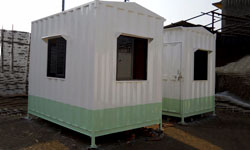
The construction industry is changing rapidly. Businesses today need faster project completion, lower costs, sustainable practices, and flexible infrastructure. This shift has brought prefabricated construction into the spotlight as a practical alternative to traditional RCC (Reinforced Cement Concrete) buildings.
But does prefabricated construction really outperform RCC structures?
Let’s compare both approaches and understand which one makes more sense in 2026.
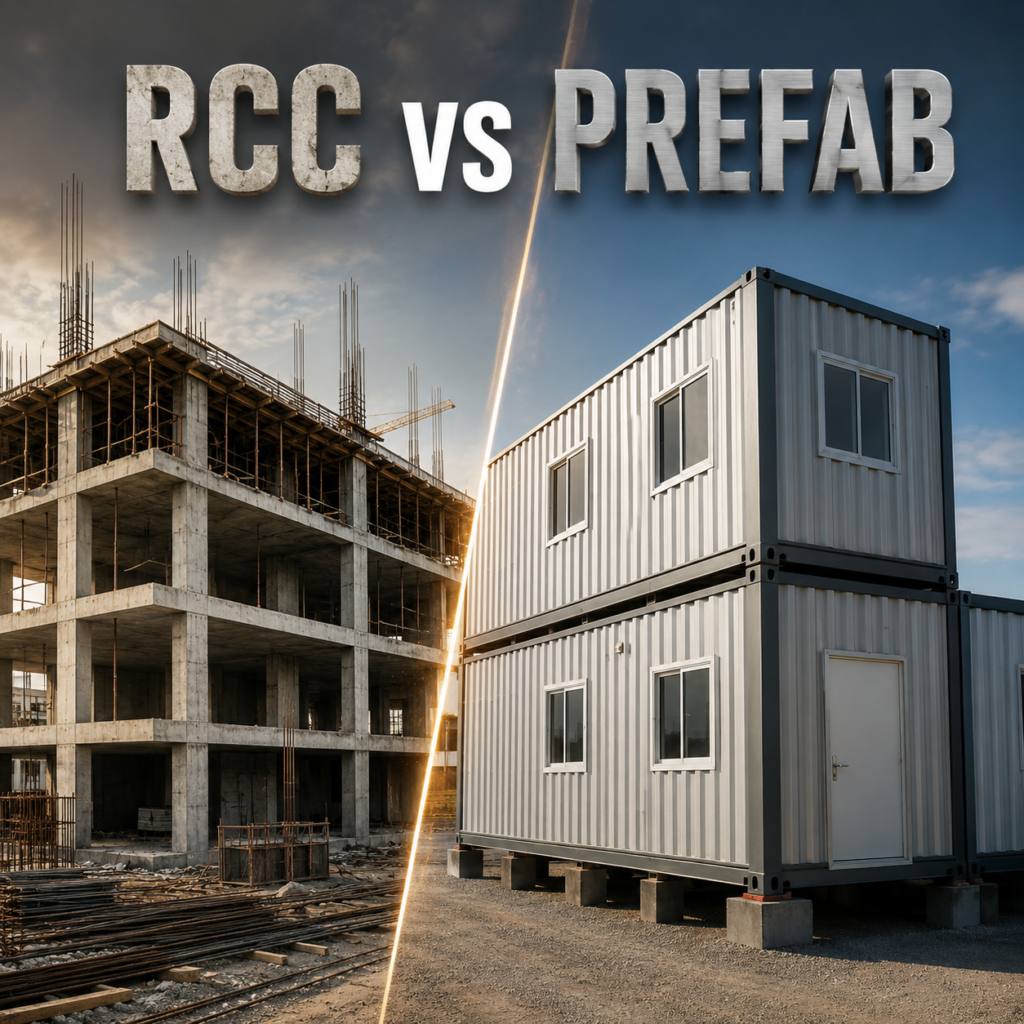
What is RCC Construction?
RCC (Reinforced Cement Concrete) construction is the conventional method used for residential, commercial, and industrial buildings. It involves on-site construction using cement, steel reinforcement bars, sand, aggregates, and labor-intensive processes.
RCC structures are known for their durability and have been the preferred construction method for decades.
Advantages of RCC Construction
- Long service life
- High structural strength
- Suitable for permanent buildings
- Better acceptance for large-scale residential projects
Limitations of RCC Construction
- Longer construction timelines
- Higher labor requirements
- Weather-related delays
- Increased material wastage
- Difficult to relocate or modify
What is Prefabricated Construction?
Prefabricated construction involves manufacturing building components in a controlled factory environment and assembling them at the project site.
Examples include:
- Portable cabins
- Site office cabins
- Security cabins
- Portable toilets
- Modular offices
- Prefabricated workforce accommodations
This method significantly reduces on-site construction work and project delays.
Advantages of Prefabricated Construction
- Faster installation
- Lower labor dependency
- Minimal material wastage
- Better quality control
- Expandable and relocatable structures
- Environmentally friendly construction process
Prefabricated vs RCC Construction: A Practical Comparison
1. Construction Speed
Prefabricated Construction:
A portable office or site cabin can often be delivered and installed within days.
RCC Construction:
Projects may take several months due to excavation, curing, masonry work, and finishing processes.
Winner: Prefabricated Construction
2. Cost Efficiency
Prefabricated Construction:
Reduced labor costs, lower material wastage, and faster project completion often result in significant savings.
RCC Construction:
Material costs, labor expenses, curing time, and project delays can increase overall expenditure.
Winner: Prefabricated Construction
3. Flexibility
Prefabricated Construction:
Structures can be relocated, expanded, modified, or reused at different locations.
RCC Construction:
Permanent structures offer little flexibility once completed.
Winner: Prefabricated Construction
4. Sustainability
Modern businesses increasingly prioritize environmentally responsible construction.
Prefabricated Construction:
- Less construction waste
- Reduced site disturbance
- Lower carbon footprint
- Reusable building components
RCC Construction:
- Higher cement consumption
- Increased waste generation
- Greater environmental impact
Winner: Prefabricated Construction
5. Durability
Many people believe prefabricated structures are temporary. However, modern prefabricated buildings are designed using high-quality steel frameworks, insulated panels, and weather-resistant materials.
With proper maintenance, prefabricated structures can provide reliable service for many years.
For heavy-load and multi-storey permanent developments, RCC still remains a strong option.
Winner: Depends on the application
Where Prefabricated Construction Excels
Prefabricated solutions are ideal for:
- Construction site offices
- Security cabins
- Portable toilets
- Sales offices
- Temporary classrooms
- Worker accommodations
- Industrial offices
- Storage facilities
- Healthcare camps
- Event infrastructure
Businesses that require speed, flexibility, and cost control often find prefabricated buildings to be the better investment.
The Future of Construction in 2026
The demand for faster project execution and sustainable infrastructure continues to grow. Across industries, companies are adopting modular and prefabricated solutions to reduce project timelines and optimize costs.
While RCC construction remains essential for many permanent developments, prefabricated construction has become the preferred choice for businesses that value efficiency, scalability, and rapid deployment.
Final Thoughts
The right construction method depends on your project’s objectives.
If you need a permanent, large-scale building with minimal future modifications, RCC may be suitable.
However, if your priority is faster installation, lower costs, flexibility, and sustainable construction, prefabricated structures offer a smarter solution in 2026.
At EECO Portable Solutions, we specialize in manufacturing durable, weather-resistant, and customizable portable cabins and prefabricated structures designed to meet modern business requirements.
Whether you need a site office cabin, security cabin, modular office, or portable infrastructure solution, our team can help you build faster and smarter.
Looking for a reliable prefabricated construction partner? Contact EECO Portable Solutions today and discover how modern modular construction can transform your project.