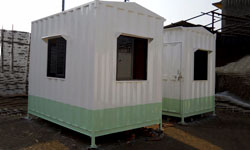
India’s construction sector is undergoing a structural transformation. Driven by the largest infrastructure investment programme in the country’s history, a growing skilled labour shortage, and increasing recognition of the limitations of traditional on-site construction, prefabricated — or prefab — building methods are moving from niche application to mainstream adoption.
This article examines the current state of prefab construction in India: market size, growth trajectory, the sectors leading adoption, and the factors driving the shift.
Market Size and Growth
The global prefabricated construction market was valued at approximately USD 184 billion in 2024. India accounts for a growing share of this total, with the domestic market expanding rapidly in line with the country’s infrastructure and industrial development.
The market is projected to grow at a compound annual growth rate (CAGR) of 5.9% through 2030, reaching approximately USD 260 billion globally. India’s segment is expected to grow faster than the global average, driven by the National Infrastructure Pipeline (NIP) commitment and growing adoption across healthcare, housing, and industrial sectors.
Key Drivers of Growth in India
The National Infrastructure Pipeline
India’s NIP commits ₹111 lakh crore to infrastructure development over five years. The scale of this commitment — spanning roads, railways, metro systems, ports, airports, smart cities, and affordable housing — is simply not achievable at the required pace through traditional construction methods alone. Prefab is a structural necessity, not an optional upgrade.
Skilled Labour Shortage
India’s construction sector faces a growing shortage of skilled on-site labour. The NSDC has identified construction as one of the sectors with the largest skilled worker deficit. Prefab manufacturing addresses this by shifting labour-intensive work to factory settings, where tasks are more repetitive, training pipelines are more effective, and productivity per worker-hour is higher.
Monsoon and Weather Dependency
India’s monsoon season effectively reduces the productive construction window to 8 months per year in many parts of the country. For the remaining four months, prefab manufacturing — conducted indoors, in factory environments — continues uninterrupted. This alone makes prefab significantly more efficient on an annualised basis than traditional on-site methods.
Quality and Consistency Demand
Increasing regulatory scrutiny of construction quality — particularly in healthcare, defence, and public infrastructure — is driving demand for the factory-standard consistency that prefab manufacturing delivers. The ability to certify quality at the component level, before installation, is a significant advantage in regulated procurement environments.
Sectors Leading Prefab Adoption in India
Construction and Infrastructure
The largest single application of prefab in India remains portable and modular site infrastructure — office cabins, labour accommodation, security posts, toilet blocks, and canteen units. These are deployed at construction sites across the country, with manufacturers like EECO Portable Solutions delivering within 24 hours of order.
Affordable Housing
The Pradhan Mantri Awas Yojana (PMAY) has created massive demand for rapid, cost-effective housing construction. Prefab wall panels, modular kitchens, and volumetric bathroom units are increasingly used in PMAY projects to meet delivery targets.
Healthcare
The COVID-19 pandemic demonstrated the healthcare sector’s dependence on rapid-deploy modular infrastructure. Vaccination camps, overflow wards, and field medical posts deployed during the pandemic were almost universally modular. This capability is now embedded in healthcare infrastructure planning.
Industrial and Logistics
India’s expanding manufacturing and logistics sectors are major consumers of prefab structures — for quality labs, security infrastructure, administration offices, and worker welfare facilities. The speed of prefab deployment supports the rapid pace of industrial park expansion.
Technology and Innovation Trends
BIM Integration
Building Information Modelling (BIM) is increasingly used in conjunction with prefab manufacturing to pre-detect clashes, optimise component sequences, and reduce on-site coordination time. The combination of BIM design and factory manufacturing is the most efficient delivery method for complex modular buildings.
Sustainable Manufacturing
Environmental regulations and ESG reporting requirements are driving demand for construction methods with lower embodied carbon. Prefab manufacturing typically reduces material waste by 70–80% versus on-site construction — a significant sustainability advantage that is increasingly reflected in project specifications.
Challenges and Constraints
Despite strong growth, prefab adoption in India faces several constraints:
- Logistics: heavy prefab components require specialised transport, and road quality and access limitations affect delivery to some locations
- Design standardization: the construction industry’s preference for customized design creates challenges for standardized prefab component systems
- Perception: persistent perception that prefab equals lower quality — a perception the industry’s output is steadily correcting
- Financing: some financing structures in Indian construction do not easily accommodate the upfront component manufacturing cost of prefab
The 2026–2030 Outlook
The trajectory for prefab construction in India is clearly upward. The combination of massive infrastructure demand, structural labour constraints, monsoon productivity loss, and increasing quality requirements creates conditions where prefab adoption is not merely attractive — it is increasingly the logical default.
The organisations — manufacturers, contractors, developers, and government agencies — that build prefab capabilities now will be best positioned to execute on India’s infrastructure ambition at the pace the country requires.
| The prefab transition in Indian construction is underway. The market data, the infrastructure context, and the project outcomes all point in the same direction. |